Luang Pho Thob Thammapanyo was born on Friday, the 14th day of the 4th lunar month, in the Year of the Snake, corresponding to March 3, 1881, at Ban Yang Hua Lom, Tambon Nai Yom (now Tambon Wang Chomphu), Amphoe Mueang, Phetchabun Province. Luang Pho Thob was the third child of Mr. Phueak and Mrs. In Muangdee, and had four siblings: 1. Mr. Wang Muangdee, 2. Mrs. Bai Muangdee, 3. Mr. Thob Muangdee (Luang Pho Thob), and 4. Mrs. Daeng Muangdee. He was ordained as a novice at the age of 16 (1897) at Wat Chang Phueak, with Phra Ajarn Si as his preceptor. In 1902, he was ordained as a monk at Wat Ke Kaeo, Ban Nai Yom, Amphoe Mueang, Phetchabun Province.
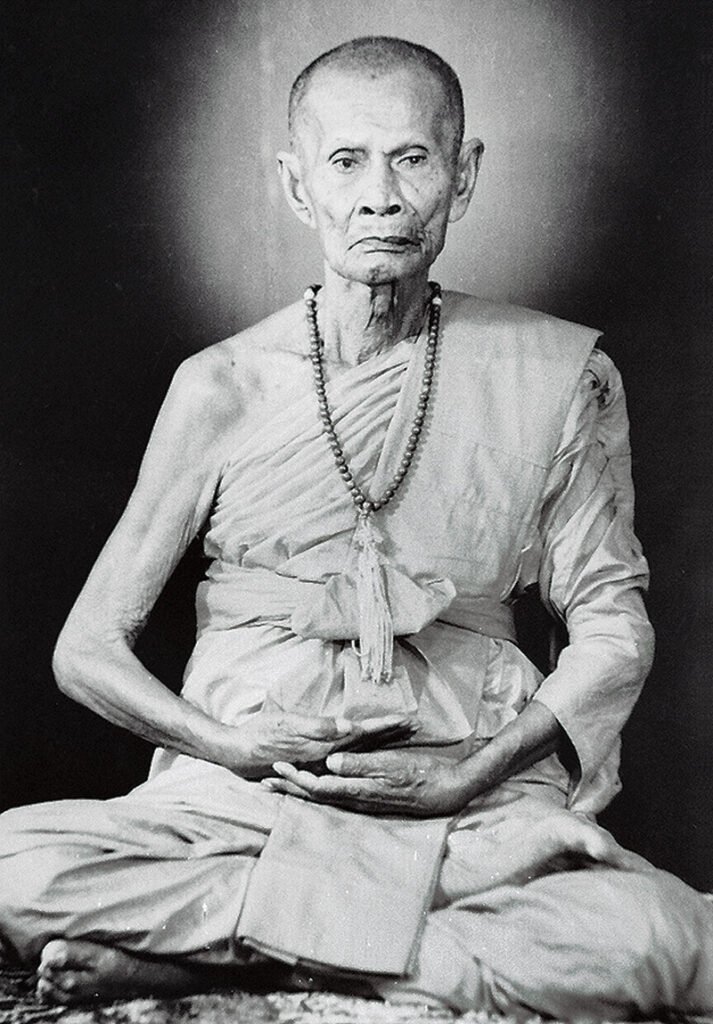
 

lp topWith Phra Khru Mueang as his preceptor, Phra Ajarn Pan as his karma-vachana teacher, and Phra Si as his anusasana teacher, he received the monastic name Dhammapanyo. He then studied Buddhist scriptures, monastic discipline, and Vipassana meditation under Phra Ajarn Pan of Wat Silamong and Phra Ajarn Ngao of Wat Ban Tiu, Lom Sak District, and embarked on a pilgrimage from that time. On March 13, 1976, Wat Chang Phueak held its annual festival and laid the foundation stone for the new ordination hall. That day, there was heavy rain, and that night, Luang Pho became seriously ill. On the afternoon of March 14, 1976, he was taken to a hospital in Bangkok, but he passed away peacefully at 4 PM on March 14th, 1976, only reaching his home in Na Chaliang.

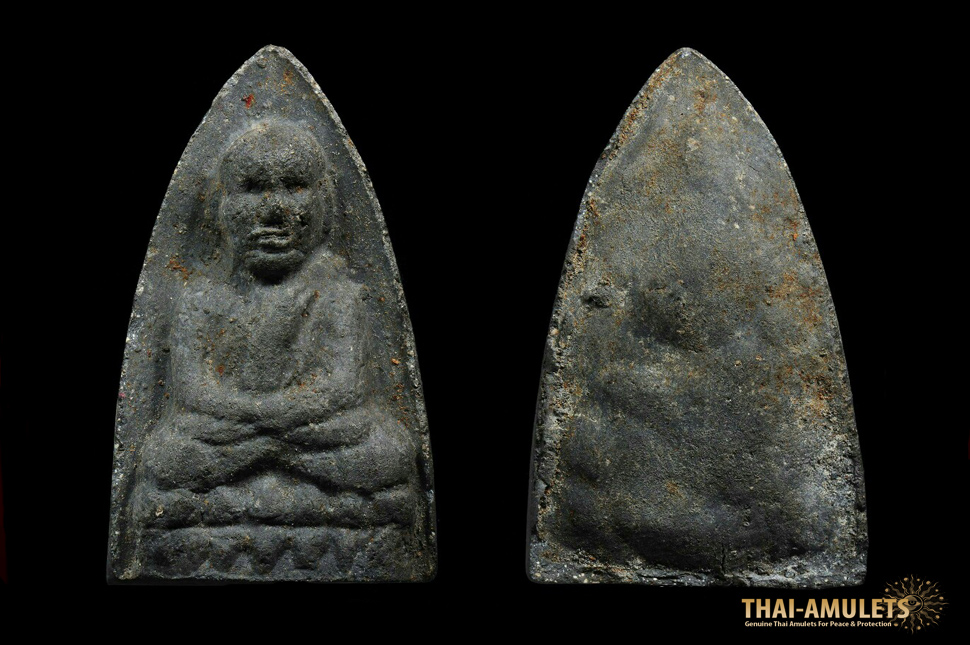
Luang Phor Thob learned the art of making amulets from Luang Phor Siw Khunwaro. Luang Phor Thob received guidance from Luang Phor Ngao of Wat Ban Tiu when he went to study Vipassana meditation with him. Luang Phor Siw, recognizing the extraordinary spiritual potential in Luang Phor Thob, passed on the knowledge of making various amulets including the single-piece amulet, the Five Buddha amulet, the Great Subduer amulet, the Fourfold amulet, the Nine Auspicious amulets, and the Great Brahma amulet.

For this reason, Luang Phor Thob’s spiritual power is renowned for its supreme invincibility (Maha Utm) as number one, protection from harm (Klaew Klaad) as number two, and compassion (Metta) as number three. The lineage of Luang Phor Thob, widely accepted and known, is the mother teaching, the core teaching in the science of Buddhist magic: the Pattamang Scripture of the Five Buddhas, consisting of eight sections and one “Kham Lek” (a specific section). According to ancient texts, those who wish to master this lineage must successfully study all eight sections and one “Kham Lek,” delving deep into the principles and essence of each chapter. Upon completion of section 1, one can proceed to study section 2 and so on. Only then can one learn other lineages. It is not about rote memorization; this knowledge requires achieving Kasiṇa (meditative absorption) and Samadhi (concentration).

– Verse 1: Napadmaṃ Namo Buddhaya. Make a lute, consecrate a lute. Make a drum, consecrate a drum. Make a bheda, consecrate bheda. Make an angku, consecrate an angku. Make a sira, consecrate sira. Erase lute, drum, bheda, angku, sira, becoming Namo Buddhaya. Erase Namo Buddhaya, becoming Ma A U. Erase Ma A U, becoming the image of Phra Kavampati. Erase the image of Phra Kavampati, becoming Avana Unalom. Erase Avana Unalom, becoming nothingness. Erase nothingness, becoming great nothingness. Erase great nothingness, becoming Nibbāna nothingness.

– Verse 2: “Pathamang Namo Buddhaya,” then erase “Namo Buddhaya” to become “Ma-a-u,” then erase “Ma-a-u” to become “Uthai Ongkarn,” and so on. Continue this process until completion. The inscription of this mastered magical art will manifest its utmost power. – The inscribed amulet plates in Luang Pho Thob’s 3-King Takrut (amulet) from the late period will have four plates. The copper plates will contain the Tri Sarana Khom (Three Refuges) amulet, inscribed around it with the heart of the Tri Sarana Khom (Three Refuges) mantra: “Buddha Sang Mi.” Among the revered monks who used this amulet are Luang Pho Ding of Wat Bang Wua, Luang Pho Kuay, Luang Pho Liap, and Somdej Phra Wanarat (Daeng), etc. It possesses exceptional protective power.

– The copper plate contains the essence of the Buddha’s virtues, the nine auspicious qualities, and is inscribed with eight sacred characters. It is the ultimate mantra for protection and great popularity.

– The lead plate will contain a collection of sacred symbols, including the Itipiso 8 Directions mantra and the Sampuddhe mantra, which encompasses the entire universe.

– The fourth lead plate will be inscribed with the heart mantra of the Buddha and the Na Cha Ri Ti mantra, serving as a protective yantra plate. Luang Phor Thob’s amulet is highly powerful, encompassing all aspects including invincibility, protection from harm, and popularity. – Luang Phor Siw Khunwaro’s amulet is inscribed with the Napatmung Yantra (Five Buddhas). The clear, deep inscriptions on the copper plate indicate the powerful and intense energy of the inscription. This particular amulet is made of copper, encased in copper, and sealed at both ends with inscribed plates. It is a true invincibility amulet. This amulet indicates that it belongs to the same lineage of magical knowledge. It was definitely created before 2489 BE (Buddhist Era), as Luang Phor Siw passed away in 2489 BE. The amulet is over 60 years old. The connection between the two lineages is evident in the tangible characteristics unique to each tradition. This is truly the ultimate amulet from Phetchabun province.

Phra Ajarn Si served as the preceptor when Luang Pho Thob was ordained. Later, Phra Ajarn Muang from Wat Kae Kaeo became the preceptor, with Phra Ajarn Si as the Anusavanacharya and Phra Ajarn Pan as the Kammawacacharya. Phra Ajarn Si had a close relationship with Phra Ajarn Pan, and most notably, Phra Ajarn Pan and Phra Ajarn Si passed on knowledge of Buddhist magic from the Napadmang scriptures, the Five Buddhas scripture, the main scriptures, and the elemental incantations. They also taught Luang Pho Thob the 108 heart incantations and the 1900 incantations. Afterward, Phra Ajarn Si and Phra Ajarn Pan introduced Luang Pho Thob to Phra Sangworathamkhun, or Phra Ajarn Ngao, of Wat Ban Tiu. During this meeting, Luang Pho Thob learned Vipassanā meditation until he achieved mastery. Luang Pho Ngao also kindly imparted knowledge of the ten Kasina meditations and the four Mahābhūti meditations. It was here that Luang Pho Thob achieved a high level of Tejo Kasina, enabling him to contemplate the sun—a discipline that suited him best. Subsequently, Luang Pho Thob traveled to study the art of making amulets from Luang Pho Siu, as instructed by Luang Pho Ngao. This lineage of amulets has been proven effective by the general public, and its teachings have been verified and confirmed by numerous witnesses.

Some of these individuals are still alive today. The information, collected over more than 20 years, is now compiled into this historical book. Audio recordings of Luang Pho Thob, obtained through interviews with him, serve as confirmation. After completing his studies in various disciplines, Luang Pho Thob embarked on a pilgrimage, seeking solace and meditation in various locations from Phetchabun. He found refuge in the Khao Wua Daeng cave in Chaiyaphum province, now a monastic retreat. This place is considered sacred and mystical, and many renowned masters of the past sought enlightenment, the ultimate goal of Buddhist teachings, to attain liberation. This portion of the information is presented here; further details would be inappropriate and would violate the extraordinary nature of the teachings of the revered monk, Phra Khru Thep Lok Udon. After returning to Phetchabun, Luang Pho Thob resided at Wat Ko Kaeo until 1929, when he was appointed abbot of the temple.

In creating his amulets (Takrut), Luang Phor Thob adhered to natural principles, determining the length of the amulet. For example, a single Takrut, as we know it, must be at least 4 inches long (according to ancient tradition, the length of a single Takrut should be as long as seven tamarind leaves arranged in a row). According to ancient texts, the length of the Takrut has a specific origin. The length of seven tamarind leaves arranged in a row represents the seven Abhidhamma scriptures: Dhammasanghani, Vibhanga, Dhatukatha, Puggala-pannatti, Kathavatta-maka, and Patthana. Therefore, Luang Phor Thob’s Takrut are not mere talismans without meaning according to doctrinal beliefs. They are not meant to promote blind faith in Buddhist magic, but rather to embody the power of the Buddha. Because Luang Phor Thob’s Takrut are created according to ancient texts, it’s no wonder they are frequently associated with miraculous experiences. The inscription of the sacred characters on the metal plate requires exceptional skill, precise pressure from the stylus, and profound concentration.

Luang Phor Thob’s amulets are powerful even during the inscription process. Uncle Sompong told me and อาจารย์ Weerawat that after the amulet was inscribed, it would be tested by shooting at it… If the bullet didn’t penetrate, then it would be taken to Luang Phor Thob for further consecration. Luang Phor Thob said that the person inscribing the amulet must have unwavering concentration and a calm mind while inscribing, and must recite specific incantations, chanting them repeatedly until the inscription process was complete. Luang Phor Thob used this incantation: “Namo Buddhaya Yatha Phutmona,” chanting it back and forth to control and maintain the concentration of the inscriber. He also used another incantation specific to his lineage of amulet making.

“Buddho Buddhang Dhanakantang Arahang Buddho Namo Buddhaya.”

This mantra is a powerful invincibility spell.

Those who can recite it, both forward and backward, must have strong, unwavering concentration, focusing their attention on each inscribed character. Only a few people inscribed these amulets for Luang Pho Thob: Ajarn Peng, Ajarn Sompong, and one monk from Wat Kutiphra…

40-50 years ago, Phetchabun province was mostly forest. Back then, anyone visiting Phetchabun had to bring white cloth to wrap the bones of those who died because malaria was rampant. It was a very remote province. Nevertheless, a young monk named Thob performed miracles and brought fame to Phetchabun. In 1922, he was invited to participate in a major Buddha consecration ceremony at Wat Suthat. At that time, the young monk from Phetchabun became known throughout the country. Not a single photographer could capture a picture of Phra Thob. His fame skyrocketed in 1926 when he was invited to another Buddha consecration ceremony at Wat Phra Sing in Chiang Mai. The same thing happened there – no one could photograph him. From then on, Phra Thob’s name became known throughout the country, and he was invited to important consecration ceremonies everywhere. Luang Pho Thob was always invited to participate in the ceremony; this was the first miracle of Luang Pho Thob and is still talked about to this day.


The Definitive Takrut Collection.

The following list comprises the monks that have blessed the most sought after takrut amulets. Any good collection should be based upon this core group, in doing so you will be absolutely assured of building a collection that will have real value and will become a great investment.

1. Luang Phor Jai, Wat Sadet, Samut Songkran
2. Luang Phor Khong, Wat Bangkaprom, Samut Songkran
3. Luang Phor Gaow, Wat Puangmulai
4. Luang Phor Rung, Wat Ta Krabue, Samut Sakon
5. Luang Phor Run, Wat Khao Yod, Bangkok
6. Luang Phor Pu, Wat In
7. Luang Phor Iam, Wat Nang
8. Luang Phor Nak, Wat Arun
9. Luang Phor Toh, Wat Praduchimplee
10. Luang Phor Suk, Wat Makhamtao
11. Luang Phor Pit, Wat makang, Pichit
12. Luang Phor Poo, Wat Tafor, Pichit
13. Luang Phor Poh, Wat Wang Manaow. Pichit
14. Luang Phor Dtieng, Wat Kaoreupchang, Pichit
15. Luang Phor Tah, Wat Paniengdaek, Nakon Pathom
16. Luang Phor Boon, Wat Klang Bang Gaew
17. Luang Phor Tae, Wat Sam Ngam
18. Luang Phor Noy, Wat Dhamasala, Nakon Pathom
19. Luang Phor Parn, Wat Bang Hia
20. Luang Phor Peuak, Wat Gingkaew
21. Luang Phor Jan, Wat Nangnoo, Lopburi
22. Luang Phopr Yim, Wat Nongbua, Kanchanaburi
23. Luang Phor Plien, Wat Tai, Kanchanaburi
24. Luang Phor Glan, Wat Phrayatigaram, , Ayuthya
25. Luang Phor Jong, Wat Natangnok, Ayuthya
26. Luang Phor Kan, Wat Nokrajap
27. Luang Phor Thiem, Wat Kasat Worawiharn, Ayuthya
28. Luang Phor Parn, Wat Bangnomkho Ayuthya
29. Luang Phor Doo, Wat Sakae
30. Luang Phor Niem, Wat Noi Bang Pla Ma, Suphanburi
31. Luang Phor Mui, Wat Donrai, Suphanburi
32. Luang Phor Thongsuk, Tanod Luang, Phetchaburi
33. Luang Phor Top, Wat Chondan
34. Luang Phor Doem, Wat Nongpho, Nakhon Sawan
35. Luang Phor Prom, Wat Chongkae
36. Ajahn Nong, Wat Saikhao, Pattani
37. Luang Phor Mon, Klong 12, Pathum Thani
38. Luang Phor Glin, Wat Sapansoong.


BE 2505 Luang Phor Thuad “Tao Reed” Amulet Made from Mek Phat Alloy:

The term “Mek Phat” is well-known among amulet collectors. This alloy is used to create amulets with great power and remarkable spiritual qualities. However, it’s surprising to learn that the Luang Phor Thuad “Taoreed” amulet, made from Mek Phat alloy in 1955, which should be the most expensive, is actually one of the cheapest. Why is this the case?

The term “Mek Phat” has often been misspelled and misunderstood. Many people write it as “Mek Phat” (เมฆพัตร) or “Mek Phrat” (เมฆพรรดิ์), which are incorrect according to the Thai dictionary. The correct spelling is “Mek Phat” (เมฆพัด).

Despite the amulet’s potent spiritual attributes and the revered nature of Luang Phor Thuad amulets, this particular version remains undervalued. The reasons behind this phenomenon are worth exploring for collectors and enthusiasts alike.

What is Mek Phat? Mek Phat is a type of metal obtained through alchemical processes based on ancient Thai texts. It is believed to be a magical element with inherent power. Mek Phat is produced by smelting a combination of lead, copper, and tin. According to traditional texts, the process involves smelting these metals for seven days and nights. During this time, various medicinal herbs, including sulfur, mercury, and several potent plants like black turmeric, disappearing tree, Moke wood, black ginger, black galangal, red soapwort, and blood soapwort, must be added to the mix.

These materials are thrown into the crucible while continuously chanting incantations for the entire seven-day and seven-night period. When completed, the result is a shiny black metal with a slightly bluish hue. The metal is very hard, but paradoxically, despite its hardness, it is also very brittle and can easily crack or break if dropped or subjected to strong impacts.

In ancient times, revered monks and teachers often used Mek Phat alloy to create amulets. Notable examples include Phra Khru Pachimthitborihan (Nak Chotiko) from Wat Huay Chorakhe in Nakhon Pathom, and Phra Ajarn Thap from Wat Anongkaram. Each of these Mek Phat amulets is valued at millions of baht due to their historical and spiritual significance. The Mek Phat alloy originated from the alchemical practices of ancient times.

The earliest known origins of Mek Phat seem to trace back to Nakhon Pathom. In ancient times, people engaged in alchemy believed that they could create gold, inspired by its yellow color. Without modern knowledge of chemistry, they thought that adding yellow substances to molten metals would produce gold. At that time, it was not understood that gold is a pure element and cannot be created by mixing other metals.

Desiring to produce their own gold, people experimented by adding various yellow substances to molten metals such as iron, copper, lead, and tin, hoping to create gold. For instance, they would add a yellowish substance called Suphanna, commonly sold in Chinese herbal shops, into the melting pot. However, instead of producing gold, they ended up with a new type of metal with a shiny black appearance and a bluish hue. This new metal, Mek Phat, thus first appeared and was subsequently used in amulet creation, with its initial use being notably recorded in Nakhon Pathom.

The substance known as “Suphanna” is actually sulfur. When sulfur is mixed with any metal, the resulting alloy, once cooled, will be hard but brittle and prone to breaking when struck or dropped forcefully. When sulfur is added to hot, molten metal, it reacts to form sulfuric acid and hydrogen sulfide gas. The hydrogen sulfide gas is dark in color, has a foul odor, and is toxic to humans. Sulfuric acid reacts with the molten metal to produce copper sulfate and iron sulfate, both of which have a deep blue color. This reaction gives the resulting alloy its characteristic shiny black appearance with bluish streaks, which is a distinctive feature of the Mek Phat alloy.

The metal “Mek Phat” is considered the supreme metal in the realm of occult sciences. In ancient times, it was commonly referred to as a “sacred metal.” This metal is created through an intricate process of melting various “minerals” together in a crucible, incorporating different kinds of herbal “wan” extracts. The entire process involves the recitation of incantations and blessings. When completed, the resulting alloy is believed to possess inherent sanctity and power, even without additional consecration rituals. It is said to offer protection against dangers, repel evil spirits, and counteract black magic and sorcery.

Mek Phat is also considered a powerful object for improving one’s fortune, turning bad luck into good, and providing unparalleled protection. In ancient times, Mek Phat was classified as a type of “Luk Bao” (lightweight object), which might be confusing to some. According to Brahmin and Khmer occult texts, if someone successfully smelts Mek Phat and holds it in their mouth, they would gain the ability to become invisible, fly, walk on the tops of grass blades, and walk on water, truly embodying the name “Luk Bao.” When used to create sacred objects, Mek Phat is believed to magnify its power a thousandfold, making it exceptionally potent and revered.

Luang Pu Thuad Dao Reed (Yai) Back Amulet in Mek Phat Alloy, Wat Chang Hai, created in 1962 (B.E. 2505). This amulet was commissioned by Prince Chaloem Phon Dikhamporn Yukhon (Middle Prince). Initially, the Mek Phat alloy was not intended for sale at the temple like other mixed metal amulets. Many mistakenly believe it was created simultaneously with other mixed metal amulets at Wat Chang Hai in Pattani, but this is not true. The Mek Phat alloy amulets were created earlier, with a gap of several months before the mixed metal ones.

The amulets in gold, Mek Phat alloy, navaloha (nine-metal alloy), and mineral alloy were initially made for the prince’s family. Only later did he decide to create amulets for Wat Chang Hai. It can be said that the initial batch was intended for personal use, with some eventually donated to Wat Chang Hai.

The metal amulets of Luang Pu Thuad that Prince Chaloem Phon Dikhamporn Yukhon made for his family include gold, Mek Phat alloy, navaloha (nine-metal alloy), and mineral alloy. Back in the day, Wat Chang Hai set the rental price for Luang Pu Thuad Large Iron-Kettle Back Amulets in Mek Phat alloy significantly higher than those in other mixed metals. This suggests that there is something particularly special about the Mek Phat alloy amulets, making them more valuable.

One worshipper that participated in the ceremony of casting the Mek Phat alloy amulets and who followed Prince Chaloem Phon at that time,stated that;  “during the making of the Mek Phat alloy amulets, Ajahn Tim was present at the ceremony. The spirit of Luang Pu Thuad, through Ajahn Tim, oversaw and directed the spiritual energy of the ceremony, ensuring the creation of exactly 999 amulets using three different molds. Unlike other metal amulets, the Mek Phat alloy amulets were cast one by one into the molds, not poured in clusters like the other mixed metal versions.”

After the 999 amulets were cast, Ajahn Tim performed the consecration. During this ceremony, a fragrance like jasmine filled the air, astonishing those present. After a while, Ajahn Tim opened his eyes and, in a voice reminiscent of a very old monk, said something profound that left a lasting impression on all attendees.

The merits of this consecrated amulet include protection against all dangers, such as malevolent spirits, wild animals, and even gods and goddesses cannot harm it. It safeguards against illnesses, fevers, stomachaches, and can alleviate discomfort when ingested. In times of danger, it can shield the body and ward off any peril, whether on land, in water, or in the air. If it has not expired, the wearer remains invisible to those with malicious intent. However, it should not be used for wrongful purposes or distributed recklessly, as it is potent enough for one person alone.


The Luang Pu Thuad Rien, Model 2, from BE 2502, was the second medallion series created by Phra Ajarn Tim of Wat Chang Hai, following the first “samma” medallion series. This second model features an oval shape and was produced in various materials such as gold, alloy, and blackened red brass. Due to the high demand from the faithful devotees of Luang Pu Thuad amulets, multiple molds and presses were used to ensure a sufficient quantity of medallions.

The Model 2 medallions can be categorized into two main types based on the size of the beaded edge on the front of the medallion: small beaded and large beaded. Each type can be further divided into several sub-molds:

Large Beaded Edge (Big Fish Egg)

  1. Wood Pattern Block
  2. Phoo Yoi Block (Drooping Bud)
  3. Rain Line Block
  4. Standard Block

Small Beaded Edge (Small Fish Egg)

  1. Long Phoo Yoi Block
  2. Large Face, Short Phoo Yoi Block
  3. Old Face, Short Phoo Yoi Block
  4. Gold Block, 3 Lines on Forehead
  5. Gold Block, 2 Lines on Forehead

The most popular type of the Model 2 medallion is the “Wood Pattern” block, notable for the spelling of “Chang Hai” as “Chang Hoi”. This version is highly valued and considered second only to the first model medallion. In pristine condition, with original blackened finish and intact features, such medallions can fetch serious sums of money, particularly if the nose is not flattened and the original blackening is intact.

Description of the Medallion

  • Front: The oval-shaped medallion features an image of Luang Pu Thuad in full meditation posture. Above his head is an inscription in ancient Khmer script: “Na Mo Bodhisatto Akantimaya Iti Bhagawa.” Flanking his knees are half-body elephant figures with raised trunks, and beneath his likeness is the Thai inscription “Luang Pu Thuad Wat Chang Hai.”
  • Back: The reverse side displays a half-body image of Phra Kru Visai Sophon (Tim Dhamma Tharo). Above his head is another ancient Khmer inscription: “Na Mo Buddha Ya Na Mo Pa Dha Cha Bha Ka Sa.” Below the image is the Thai inscription “Phra Kru Visai Sophon (Tim).”

There’s a saying among believers that goes, “Those who hang Luang Pu Thuad amulets will not die in disgrace.” This belief reflects the widespread trust and faith in the amulet community. However, it’s important to remember that accumulating merit and behaving well are essential. The blessings of Buddhist virtues will be multiplied, along with adhering to the teachings imparted by venerable teachers.


LP Thaud BE 2502
หลวงปู่ทวดวัดพระเชตุพนธ์(วัดโพธ์)ปี 2502

Luang Pu Thuad, Phra Ajarn Songd, Wat Pho Tha Tien (Wat Phra Chetuphon) in 2502… This amulet was created with a mold similar to the one used for the original Luang Pu Thuad pim of Wat Chang Hai, Pattani, in BE 2497.

Construction of this pim started in the period close to 2497 and lasted about six years…

The sacred materials used in the construction were 108 types of herbs and sedges, the same as those used to create the original BE 2497 Luang Pu Thuad pim, palm leaves inscribed with sacred yant / spells and original materials from the BE 2497 batch donated by LP Tim. In fact they differ only slightly to the BE BE 2497 batch  due to the addition of Din Kak Ya Yak mixed with Bailarn, which accounts for the slightly black appearance.

This LP Thuad amulet is an excellent subsitute for the original LP Thuad pim.

Phra Achan Tim Thammatharo from Wat Chang Hai, Pattani and Ajahn Nong of Wat Sai khao joined in the consecration ceremony. Together with 108 famous monks of that era.

  • Luang Pu Thuad of Wat Sengsang
  • Luang Pu Thong of Wat Don Yai Hom
  • Luang Pu Sut of Wat Ka Long
  • Luang Pu Thop of Wat Chon Daen
  • Luang Pu Thien of Wat Bot
  • Luang Pu Kong of Wat Sarapras
  • Luang Pu Than of Wat Phra Yat
  • Luang Pu Thong Yoo of Wat Mai Nong Phaong
  • Luang Pu Du of Wat Sakae
  • Luang Pu See of Wat Sakae
  • Luang Pu Chao of Wat Chong Lom
  • Luang Pu Thaen of Wat Tham Sene
  • Luang Pu To of Wat Kasattrathirat
  • Luang Pu Toh of Wat Pradu Chimplee
  • Luang Pu Ki of Wat Hoo Chang
  • Luang Pu Nark of Wat Rang
  • Luang Pu Seng of Wat Kanlayanamit
  • Luang Pu Jong of Wat Nang Tang Nok
  • Luang Pu Mui of Wat Don Rai
  • Luang Pu Thir of Wat Pa Lai Lai
  • Luang Pu Non of Wat Klang Tha Reua
  • Luang Pu Soht of Wat Ga Long
  • Luang Pu Dea of Wat Ban Jaeng
  • Luang Pu Juen of Wat Nong Suen
  • Luang Pu Ut Tammaporn of Kanchanaburi
  • Luang Pu Thuap of Wat Khanang Leung